What Are On Page SEO Services and Why Do Businesses Need Them?
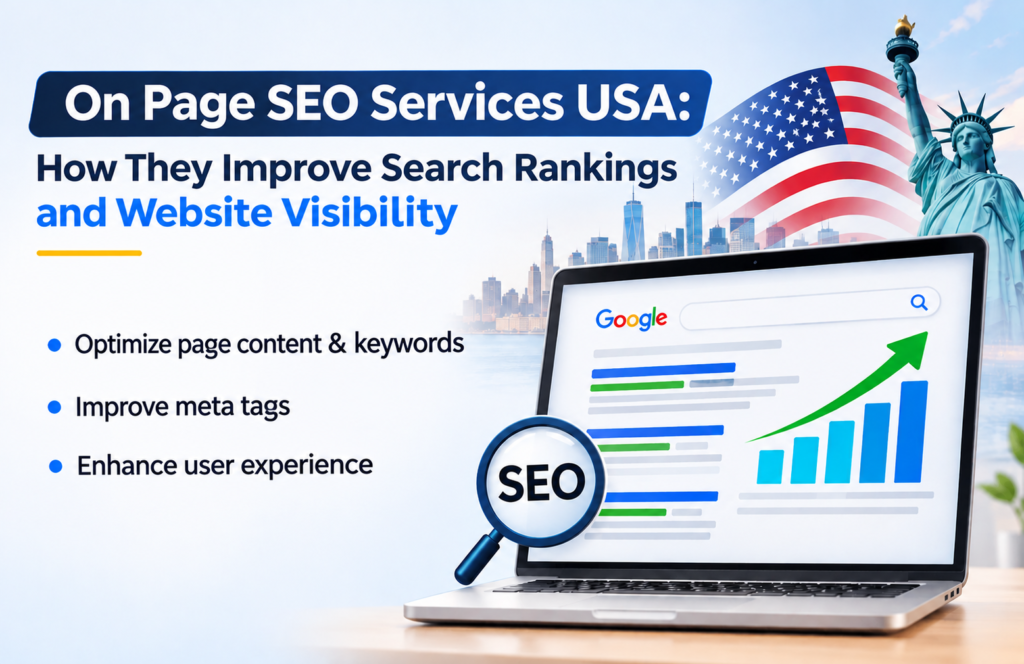
On-page SEO means optimising each page on your website to improve relevance, search engine understanding and user experience. Unlike off-page SEO, on-page SEO looks at elements that are completely under the control of the website owner. Your optimised web page will give search engines a clear indication of what your page is about, whilst making it easy for users to understand. Within the USA there are many competitive industries meaning lots of websites will be targeting the same keywords. This means simply having content and using keywords won’t be sufficient. Your pages will need to meet search intent, provide useful information and have a logical structure. Professional on-page optimisation will help you identify any issues and put improvements in place to make your website more search friendly. Key areas of on-page SEO include:- Optimise keywords – placing relevant keywords (main and secondary) throughout your headings, content, urls etc.
- Improve content – Ensure your content is informative, relevant, easy to read and will match what potential customers are searching for.
- Optimise HTML Elements – Optimise your title tags, meta descriptions, heading tags, image attributes etc.
- User Experience – Improve page layout, mobile usability and ensure important information is easy to find.
Key On-Page SEO Elements That Influence Search Rankings
There are a number of factors that impact your search rankings. On page SEO will help your business to optimise your web pages so that they are clear, targeting the right search queries and providing visitors with an overall good experience. Optimising your web pages will allow search engines to better understand the content and structure.1. Title Tags & Meta Descriptions
Title tags outline what the main topic of the web page is. They appear in most search results as click through headlines. Having a clear and descriptive title will inform visitors of your web pages topic and include your main keyword. Meta descriptions give a quick overview of what the page is about. They aren’t directly used by Google for ranking but having great meta descriptions can encourage people to click through to your website if they are relevant.2. Headings
Headings provide structure to your web pages. Your main heading (H1) should clearly identify the main topic. Smaller headings (H2/H3) will organise the additional content. Having structured headings will ensure your content is easy to read and will help search engines understand your topics.3. Keywords
Keywords should target what your customers are searching for. Rather than using the same keywords you should use a variety of related and relevant keywords. Most importantly your web pages should target the search intent of your chosen keywords. This could be informational, comparative or transactional.4. Images & Internal Links
Images should be named clearly, include the correct alt text and be optimised. These will help search engines to understand the visual content. Internal links should target the right pages and will help visitors find the relevant information. Overall this will create a more structured website.Top On Page SEO Optimisation Strategies
To implement the best On Page SEO strategies you should consider search intent, content quality, technical features and what your visitors want. Optimisation should be based on what is actually happening on your website and how you can best serve your target audience. The following strategies can help improve individual web pages:- Keyword & Intent Research – Understanding what keywords people are searching for, what they want to find and what keywords should be used on individual pages.
- Optimise Content – Ensure content is up to date, not repetitive, includes relevant information and provides real value.
- Optimise Images – Compress images, format them correctly, include clear alt text and do not have large media files.
- Internal Links – Link to other relevant pages, blogs and resources. Use descriptive anchor text.
- Add Structured Data – Add the correct schema where possible. This will help search engines understand specific content.
How On Page SEO Can Help Improve Your Website
On page optimization can help improve your organic search by helping search engines better understand your website and making your web pages more user friendly. Having relevant, structured and useful web pages will help put your website in a better position to compete in search. However there are a number of factors that determine how well your website performs in search including competition, website authority, technical performance etc. The following are some key reasons why On Page SEO can help improve your website: 1. Improves Relevance Search engines will look at your content to understand if your web pages are targeting what the user is looking for. Having the right keywords, descriptive headings and detailed information will help your web pages be relevant. Creating content that answers customers questions will help to improve this. 2. Improves Navigation Having a logical structure, clear headings and well placed internal links will help visitors to easily find what they’re looking for. This can encourage them to look at more pages. 3. Improves User Experience Having mobile responsive designs, easy to read fonts, easy to access content and optimised images will make your web pages easy to use. This can help improve engagement. 4. More Organic Traffic Opportunities Having optimised web pages will allow you to target the right search queries. This can make your website more competitive in search and help drive traffic to your website from people actively looking for your services/products/expertise.On-Page SEO Optimization Services: What Should They Include?
Reliable Search Engine Optimization services can help improve key factors of your website that will increase the relevance, organization, usability and help search engines understand your site. How much optimization is required will depend on the size of your website, industry, current performance and what your goals are. If you have a small business site you may only need some service pages optimizing. If you have a large ecommerce site you may need hundreds of product and category pages optimized. The following table outlines common services and their business value:| SEO Service | What It Involves | Expected Benefit |
| Keyword Mapping | Assigning relevant keywords to individual webpages | Better topical targeting |
| Title and Meta Optimization | Improving page titles and descriptions | Clearer search result presentation |
| Content Optimization | Improving relevance, quality, and keyword placement | Stronger content alignment |
| Heading Optimization | Organizing H1, H2, and H3 headings | Better content structure |
| Image Optimization | Compressing images and adding descriptive alt text | Improved accessibility and page efficiency |
| Internal Linking | Connecting related website pages | Better navigation and content discovery |
| URL Optimization | Creating clear and descriptive URLs | Improved website organization |
| Schema Implementation | Adding relevant structured data | Better content interpretation |
Why Choose a Trusted On-Page SEO Agency in the USA?
By working with a trusted Search Engine Optimization Agency USA, you will gain a better structured process to improve your website. They will carry out analysis of your pages to highlight areas that can be improved, such as content gaps, keyword strategy and provide recommendations based on competitor activity within your industry. Your agency should be experienced and will have a focus on improving your website organically. They will also understand the differences between different industries, audiences and will aim to improve search intent.For example, if you are a local service provider targeting customers in New York this will differ to a national Ecommerce company.A reliable SEO partner will provide:
- Audits – To analyse key areas of your website and highlight areas for improvement.
- Keyword research – Understand how your audience is searching and select the right keywords for your industry.
- Content recommendations – Improve current pages and create new content to solve your customers needs.
- On page improvements – Improving technical aspects of your pages.
- Reports – To track organic impressions, clicks, keywords and relevant conversions.
- Ongoing improvements – Analyse results and ensure strategies are being updated.
Tips to Enhance Website Visibility Through Content and Technical Improvements
You want your website pages to clearly show what they’re for and be helpful to your visitors. This can be done by regularly analysing your website. Look for any outdated information, duplicate keywords and areas that cause confusion when navigating.- Look at pages with similar search queries and ensure that you have a clear focus of keywords for each key URL.
- Use meaningful headings, examples, short description and formatting.
- Ensure your text, images, menus and forms are working well on any screen sizes.
- Look for any large images, unwanted code or other issues that could be causing slow loading times.
- Give your visitors clarity on what they should do next, either by asking for a quote, booking a consultation or contacting you.
- Use search tools such as Google Search Console and Google Analytics to track how your site is performing.
Conclusion
On-page optimisation is a key factor in creating a search friendly website. Improving the organic visibility of your website in competitive US markets can be done by focusing on your keywords, improving your content, meta tags, heading structure, internal links and images. Businesses who continually analyse and improve their website content will have more opportunities to attract relevant organic traffic. Investing in a professional optimisation will allow you to create a clear plan for your website. Having a consistent strategy will help create a more competitive website. By focusing on user needs, quality content and accurate information, you will create a website that is more valuable to your target audience.Frequently Asked Questions
What are on-page SEO services?
On page SEO services look at optimising various elements of your website. This includes title tags, meta descriptions, headings, content, images, URLs and internal links. Improving these elements will help search engines understand what your webpage is about and will result in a better and more useful website.
How will on-page SEO services improve my Google rankings?
Optimising your on-page SEO will help to ensure that your webpages are more relevant, well structured and an overall better experience. By ensuring that your keywords are targeted correctly, the content is useful, headings are descriptive and your internal links are optimised you will help search engines understand the relevance of your pages to certain searches. This will help to improve your competitiveness in organic search but will not guarantee higher rankings.
How long until I see results from on page SEO?
This will depend on many factors including the authority of your website, level of competition, how much optimisation is done and how often your website is crawled by search engines. Some optimisations may be seen within a few weeks but meaningful improvements to your organic rankings may take several months. It is important that you monitor your website regularly.
What is involved with professional on page SEO optimisations?
Most on page SEO will include keyword research, content analysis, title and meta description improvements, heading improvements, image optimisation, URL reviews, internal linking and relevant schema. The service may also include audits, monitoring and suggestions to improve your users experience.
Can on-page SEO help small businesses in the USA?
Yes, on page SEO can help small businesses. By creating useful service pages, targeting local search queries when applicable, improving content and having clear contact details you will be able to target potential customers searching for your products and services online.